
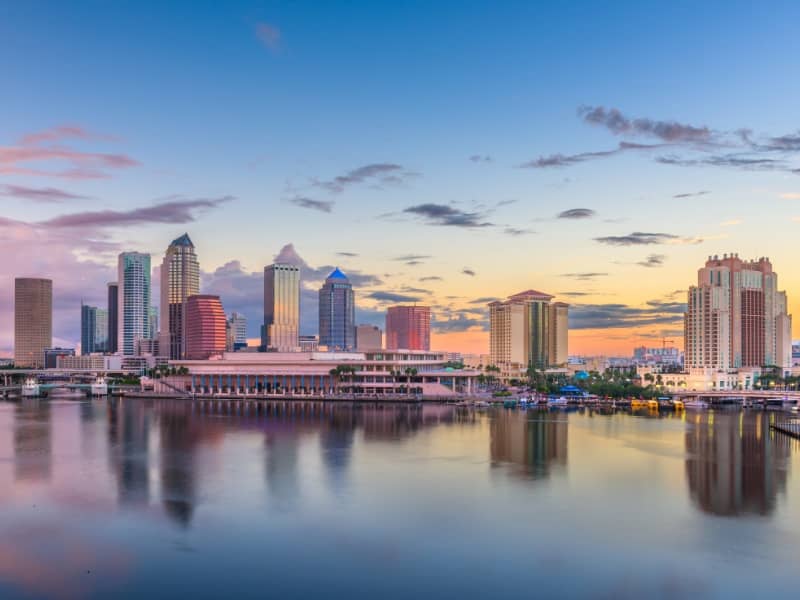
How Executives in Tampa Are Turning AI Uncertainty into Franchise Ownership
If you are in fear of your job being replaced by AI: you’re not alone. Local economies across the world are evolving as AI creates uncertainty in many white-collar jobs. And the larger the metro area, the more susceptible your job may be to AI displacement. Tampa, Florida's economy is no different.
AI Displacement in Tampa, Florida
U.S. Labor Data found that Florida was in the top five states nationally to be affected by AI automation. Tampa is the number one metro area in the state for potential displacement since it houses over 63,000 workers employed in the ten largest occupations that are vulnerable to generative AI.
Florida is sensitive to these changes. The senate even passed Bill 936 to study how automation, AI and robotics are affecting the state’s workforce. However, most Americans know that waiting to see what politicians will do about these changes is a long way from taking action.
If you are one of these 63,000+ workers in the Tampa metro area, you may not have time to wait. This is especially true the more skilled you are. Some sources cite that an executive can expect the job searching process to take at least four to six months, with many C-Suite executives looking at closer to a year.
The good news is: there are options that you can take action on now.
Business Ownership and Franchise Opportunities in Tampa, Florida
Owning a business is often a great second career option for executives who still have energy and mileage left in their careers. The leadership traits and experience of weathering the ups and downs of corporate life prepare you for the grit and long-term thinking that’s required to build a franchise market.
If you are living in the Tampa, Florida area - or are interested in moving to this part of the Sunshine State - the opportunity to build a long-term business is (almost) like shooting fish in a barrel.
Why is Tampa, Florida, such a strong market?
Location: Tampa is a natural launchpad to expand into neighboring territories, including Sarasota, Fort Myers/Naples, and Orlando. Each of these metros represent an untouched market that is primed for additional growth.
It’s Growing: Tampa is one of the fastest-growing metros in the U.S., with thousands of new residents arriving every month. This means new businesses, new commercial spaces, and new opportunities. (Even Mark Zuckerberg likes the opportunities here).
State Laws: Florida is very business-friendly with low taxes, minimal red tape, and a government culture that supports entrepreneurship (as seen in their Senate Bill 936).
Opportunities for Legal Residency: For foreign nationals seeking a path to legal U.S. residency, the E-2 Investor Visa aligns well with franchise ownership. This visa allows individuals to live in the United States while developing and directing an active, for-profit business in which they have made a substantial investment. A master franchise structure can be an ideal fit.
Why Commercial Cleaning?
While it may not sound “sexy,” commercial cleaning is one of the few industries that has a record of being recession-resistant, pandemic-resistant, and untouched by the AI disruption. As a Master Franchise owner, you know that commercial spaces rely on regular cleaning as much as they do on the internet and electricity. No business will succeed without it. For an executive who has recently been laid off due to factors out of their control, what could be more appealing than that?
Learn More
If you are an executive living in Tampa, Florida or surrounding areas and are curious about business ownership opportunities, Mint Condition may be a fit. While we welcome you to reach out to us to learn more, we also encourage you to connect with a franchise consultant who can help you find franchise opportunities that fit your skills, finances and goals.
Email our director of master franchise development, Randy Abernathy, if you’d like to start a conversation: randya@mintconditioninc.com

Laid Off but Not Done: How Detroit Executives Can Reclaim Control
Local economies across the world are evolving as AI creates uncertainty in many white-collar jobs. Detroit, Michigan’s economy is no different. Some economists believe Detroit’s white-collar workers are facing their “auto worker moment” with many of these cognitive jobs being replaced by AI. Last year’s Q4 saw hundreds of white-collar positions eliminated across the city’s major employers, citing “corporate restructuring.”
When you’ve given your time and talents to a corporation that eventually says, “thank you for your contribution, but we’re eliminating your role,” it can feel a little like being left in a life raft in the middle of the ocean. Fortunately, the job landscape in Detroit offers opportunities beyond the traditional job search.
Traditional Job Searching as an Executive
The job search timeline becomes more complex - and takes longer - with executive-level candidates. Some sources cite that an executive can expect the process to take at least four to six months, with many C-Suite executives looking at closer to a year. For most individuals, this journey is frustrating and disheartening. Some may even ask themselves, “Do I want to work for another corporation after my last experience?”
The good news is: there are options.
Business Ownership as an Executive
Owning a business may seem like a pipe dream, or potentially not even on an executive’s radar, especially when they have been focused on helping grow an organization. However, once that relationship ends, especially when an individual is a decade or two into their career, this can often be the fork in the road to really take stock of what best serves the individual and their family. Some questions that pop up for displaced executives may include:
- Do I want to work for someone else again?
- How much control of my future do I really have if I work for another corporation?
- What do I do if I’m laid off again?
For executives who still have energy for a leadership role but are craving more control and - dare we say it - a better work/life balance, business ownership becomes an appealing option.
Executives are uniquely positioned for franchise ownership success because of the skills and experience they have. From managing teams to budgeting and strategic planning, operating at a master franchise level requires working on the business versus >in the business and is very often a natural next step in their skillset.
Franchise Opportunities in Detroit, Michigan
Not all cities have master franchise opportunities (a master franchisor is an individual who owns an entire territory and operates as the franchisor for that territory), but Detroit, Michigan, does.
As of January 2026, the Detroit market is primed for commercial cleaning franchisor ownership. With a population of over 4.3 million people across the Detroit Metro area, there is an incredible opportunity to serve commercial businesses that are looking for this service. Not to mention, executives can lean on their existing business relationships within their community.
Why Commercial Cleaning?
While it may not sound “sexy,” commercial cleaning is one of the few industries that has a record of being recession-resistant, pandemic-resistant, tariff-resistant and untouched by the AI disruption.
As a Master Franchise owner, you know that commercial spaces rely on regular cleaning as much as they do on the internet and electricity. No business will succeed without it. For an executive who has recently been laid off due to factors out of their control, what could be more appealing than that?
Learn More
If you are an executive living in the Detroit Metro area and are curious about business ownership opportunities, Mint Condition may be a fit. While we welcome you to reach out to us to learn more, we also encourage you to connect with a franchise consultant who can help you find franchise opportunities that fit your skills, finances and goals.
Email our director of master franchise development, Randy Abernathy, if you’d like to start a conversation: randya@mintconditioninc.com

Commercial Cleaning Industry Trends to Watch in 2026
If the last few years have taught us anything, it’s that the definition of "clean" is constantly changing. For facility managers, office
administrators and healthcare professionals, staying ahead of cleaning trends isn’t just about having the newest tools and gadgets—it’s about ensuring your facility remains safe, compliant and welcoming for everyone who walks through your doors.
At Mint Condition, understanding where the industry is heading tomorrow helps us build better partnerships today. Whether you are managing a busy medical clinic or a growing corporate office, being aware of these 2026 trends will help you ensure your cleaning program is efficient, effective and ready for the future.
Key Trends Shaping the Commercial Cleaning Industry in 2026
The commercial cleaning landscape is shifting from reactive cleaning (fixing messes) to proactive wellness (preventing issues). In 2026, the most successful facilities will be those that balance cutting-edge technology with a genuine commitment to health and sustainability. It is no longer enough to just "look" clean; spaces need to be hygienically safe and environmentally responsible.
The Latest Trends in Cleaning Technology
Cleaning technology often gets a bad rap as being impersonal. However, when used correctly, technology actually allows cleaning partners to be more attentive to your specific needs.
Robotics and Automation in Cleaning Operations
You likely have a robotic vacuum in your home, but the commercial sector is taking this a step further. We are seeing a rise in autonomous floor scrubbers and vacuums that handle large, repetitive open spaces.
Does this mean robots are replacing your cleaning crew? Absolutely not. Instead, these tools free up professional cleaners to focus on the high-detail work that machines can’t touch—like disinfecting door handles, dusting intricate fixtures and ensuring the restrooms are spotless. It’s about using automation to support, not replace, the human touch.
AI and Data Analytics for Cleaning Optimization
By analyzing foot traffic patterns, we can adjust cleaning schedules to match the actual rhythm of your business. This aligns perfectly with a customized service approach—ensuring you aren't paying for cleaning you don't need, while guaranteeing high-traffic areas get the extra attention they deserve.
Green Commercial Cleaning Trends
Sustainability is no longer a "nice-to-have"; it is an expectation for employees, patients and parishioners alike.
Eco-Friendly Products & Practices
The smell of bleach used to be associated with "clean," but today we know better. The industry is moving toward non-toxic, Green Seal-certified chemicals that are tough on pathogens but safe for people. Beyond chemicals, we are seeing a push for high-efficiency particulate air (HEPA) filtration vacuums that improve indoor air quality rather than just pushing dust around.
The Business Case for Green Cleaning
Adopting green practices is a smart operational decision. Reducing chemical usage and waste often lowers long-term costs. More importantly, it signals to your staff and visitors that you care about their well-being. A workspace free of harsh chemical fumes is a healthier, more productive environment for everyone.
Market Trends & Forces for Cleaning Services
One-size-fits-all cleaning is officially a thing of the past. The market is demanding expertise, and cleaners need to shift away from a model that views cleaning as general labor only.
Specialization in Cleaning Services
General janitorial services often struggle to meet the strict compliance needs of specialized facilities. We are seeing a massive shift toward industry-specific cleaning.
For example, Healthcare Cleaning Services require a completely different protocol than a standard office. Medical facilities need terminal cleaning expertise, bloodborne pathogen training and a focus on preventing cross-contamination. If your cleaning partner treats a surgery center the same way they treat a warehouse, the risk is greater than patient perception.
Increased Focus on Hygiene and Health Protocols
Post-pandemic, the "hygiene theater" of wiping things down for show has been replaced by science-backed disinfection. Standards have risen. Businesses are prioritizing high-touch point disinfection and requesting more frequent audits to ensure those standards are maintained. This shift demands a cleaning partner who acts as a guardian of your facility’s health, rather than just a vendor who empties the trash.
How Businesses Can Leverage Industry Trends for Growth
Adapting Your Cleaning Services to Stay Ahead
If you are a facility manager, now is the time to review your current cleaning scope. Ask your provider: Are we using the safest products? Is our schedule optimized for our current traffic? A trusted partner will be eager to have this conversation and adjust your plan to leverage these new efficiencies.
Leveraging Market Trends for Business Expansion
For those looking to enter the industry as franchise owners, these trends represent a massive opportunity. Clients are looking for knowledgeable owner-operators who understand these complexities. By aligning with a brand that supports specialized training and modern technologies, new business owners can capture the demand for premium, reliable service.
The Future of Commercial Cleaning: What to Expect Beyond 2026
Looking ahead, we expect the line between "facility management" and "cleaning" to blur even further. Smart building monitoring systems will talk directly to cleaning teams, instantly signaling when a spill occurs or a room needs refreshing.
However, no matter how advanced the tech gets, the core need remains the same: Peace of mind. The best innovation is simply knowing that when you walk into your office, clinic, or church tomorrow morning, it will be pristine, healthy, and ready for your day.
Stay Ahead of the Curve
The commercial cleaning industry is evolving rapidly, but you don't have to navigate these changes alone. Whether you are a facility manager looking for a stress-free partnership or an entrepreneur seeking a recession-resistant business model, staying informed is the first step.
Are you ready to upgrade to a cleaning partner that keeps up with the times? Get a Free Quote for a customized cleaning plan today, or explore our Franchise Opportunities to join a team that is defining the future of clean.

Thinking About Buying a Franchise? Here’s Why a Franchise Consultant Matters
If you are interested in managing a franchise, you may not know where to start. Or, you may start with what you think you’ll enjoy (I love working out! Of course, I’d be great at running a gym). The reality is a little more complex.
The good news is, there are people who can help you navigate all of the options, based not just on what you think you’d like to do, but what would actually be the right fit. In this month’s blog, we’re outlining how a good franchise consultant can help you.
What is a franchise consultant?
A franchise consultant (sometimes referred to as a franchise broker) is an independent contractor who helps individuals become familiar with their franchise options. “Franchise brokers consult with prospective franchisees about… opportunities that may be of interest,” to them. They are there to help you find answers to any question you have about the entire process, as well as to help you get the information you need so you can make the right decision for your goals and background.
What a Good Franchise Consultant Can Do:
- Helps you explore the scope of what’s available to you
- - They know thousands of brands and can narrow it down for you.
- Makes introductions and guides you to resources
- - You’ll need legal and financial advice during this process. They can connect you to experts in these fields.
- Ask lots of questions!
- - They will want to understand your needs and background so that they can guide you towards the right fit.
What a Franchise Consultant Can’t (or Shouldn’t) Do:
- Negotiate a deal for you.
- - Their main role is to make introductions to brands that are a good fit.
- Provide legal or financial advice.
- - This is where you need the expert advice of a lawyer or financial advisor. Franchise Consultants should not be acting as either of these important experts.
- Present you with a boilerplate of brands after only just meeting.
- - You should not be on an “introductory call” with a franchise consultant, and they already have a list of brands for you to look at. They need to know about you
At the end of the day, a good franchise consultant wants you to be incredibly successful with the brand you decide to work with, so that you will refer them to your network. And creating a successful relationship requires time and understanding. Most importantly, they need to understand you: your goals, your preferences, and much more in order to make the right introductions.
What can I expect working with a Franchise Consultant?
A good franchise consultant is there to ask questions and guide you towards the opportunities that make the most sense for you. Every franchise consultant has their own process, but you should expect relatively the same type of questions during your first meetings:
- On a scale of 1-5 how interested are you in the following industries?
- Do you want to work in B2B or B2C?
- Do you want to have a brick-and-mortar?
- What is your investment comfort level?
- What type of role would you like to play in the business? (Strategy Development, Manager, boots-on-the-ground?)
A franchise consultant’s goal is to reveal opportunities you may not have even thought of. In 2025, franchise establishments increased by 2.5% (or over 20,000 units) in the United States. With that level of growth, it’s difficult to know all of the options available without an experienced guide by your side.
Perhaps most importantly, they will also let you know what is available in your territory. If you want to open the same commercial cleaning franchise as your next-door neighbor, you often can’t. Protected territories guarantee investors that they won’t have competition from their own brand (which is good news for you when you do invest). So, if you are living in Detroit, Michigan, and want to open a commercial cleaning franchise - but you can’t open the same one as your next-door neighbor - a franchise consultant can help you find other brands in that industry that are available in your territory.
A Good Franchise Consultant will Coach You On How to Read the FDD (Franchise Disclosure Document)
The FDD (Franchise Disclosure Document) is mandated and overseen by the Federal Trade Commission. This document is required for all franchises, and even the newest franchises must have it and are required to provide it to you.
By law, you must receive this important document “at least 14 days before you’re asked to sign any contract or pay any money to the franchisor or one of its affiliates.” Once you obtain this document, you’ll have lots of questions and a good franchise consultant can guide you through your initial review. For example, they may suggest examining Item 3 (Litigation) and Item 19 (Earnings or Financials) to determine if there are any initial red flags.
It’s important to remember that a good financial consultant is a guide in this process, and should not give legal or financial advice. They can teach you about the structure of the FDD and what’s included in each section. They will also suggest you engage a good franchise attorney and even introduce you to several who work in the franchise space, who can help you really dig into this data and determine what next steps to take.
A Good Franchise Consultant Will Prep You For the Discovery Phase
Once you have narrowed down your research and are ready to meet with a few franchise brands, the discovery phase can begin. The Franchise Discovery Day allows you to have a face-to-face meeting with the franchise and is “designed to provide you with insights into the franchise system and its culture.” This includes talking with people who currently own a franchise and getting their first-hand experience. A good franchise consultant will help you think through the right types of questions to ask these individuals.
Listen for patterns - not opinions. And even if someone says, “Heck no, I would never do this again,” ask why. Just because the franchise wasn’t a fit for their expectations and goals - it could still be the right fit for you. Afterward, you can talk through the responses and your thoughts with your franchise consultant and determine how to move forward.
Sounds Great, but… How Much Does a Franchise Consultant Cost Me?
There is no fee to work with one; rather, they receive a commission if you purchase a franchise from a brand to which they’ve introduced you. Commission rates are relatively the same across the industry, so regardless of how you decide to move forward, a good franchise consultant just wants to be sure you have the right fit.
A Franchise Consultant Sounds Amazing. How Do I Find This Magical Person?
There are several ways to find a good franchise consultant. If you know someone who has a franchise, ask who they worked with. Or, if you have trusted connections with business attorneys or financial advisors, they may have referrals as well. Another good place to start is with organizations developed specifically for franchise consultants. Here are a few that are well-respected and trusted across the industry:
IFPG (International Franchise Professionals Group)
FBA (Franchise Brokers Association)
BAI (Business Alliance Inc.)
FranServe
Just like with any service provider, interview a few so you can get a sense of how they operate and who you feel is the right fit for you.
Bottom Line: Get an Experienced Partner In Your Corner
Like any big investment, patience is key in making the right decision for yourself and your family. A good franchise consultant should never tell you what to do or how to spend your money - rather, they are there to show you opportunities that perhaps you hadn’t considered. You may even be entering this conversation with some trepidation (it seems like everyone knows someone who “invested all their money” in a franchise and it went sideways). But a good franchise consultant can help you understand the realities of operating a franchise and help you decide if this is indeed the right decision for you.
Beyond the Waiting Room: Why Specialized Cleaning Matters for Medical Clinics
Your patients trust you from the moment they walk through the door. However, while a bright, welcoming lobby is beneficial for reviews, the true measure of your facility is what happens where care is actually delivered.
For clinic administrators, cleanliness isn't just about aesthetics. It’s about compliance, infection control, and keeping your doors open.
Maintaining a hygienic environment in a medical setting is completely different from cleaning an office or a retail store. It requires a partner who knows the difference between "visually clean" and "medically safe."
Cleaning for Health (Because "Looks Clean" Isn't Enough)
We know that in your world, a surface that looks spotless can still fail an ATP test or harbor risks like MRSA or influenza.
Specialized medical cleaning has to break the chain of infection. This means moving beyond basic vacuuming to strict protocols for the high-risk touchpoints patients interact with—exam tables, armrests, and door handles.
At Mint Condition, our teams are trained on health and hygiene first. We don't just wipe down tables; we follow rigorous safety standards to ensure your exam rooms are safe for immunocompromised patients and staff alike.
The "Audit-Ready" Standard
One of the biggest stressors you face is the unpredictability of a facility audit. You need to know that your facility is compliant on a random Tuesday morning, not just the day before a scheduled inspection.
That consistency is almost impossible to get with a revolving door of hourly staff.
This is where the Mint Condition franchise model protects you. Because our cleaning teams are led by business owners, you don't deal with high turnover or "no-shows."
A Plan Tailored to Your Patient Flow
A pediatrician’s office during flu season has different "hot spots" than a physical therapy clinic or a dialysis center. A generic scope of work just doesn't cut it.
We take the time to build a scope around your reality. We work with you to understand your patient flow, clinic hours and risk areas to build a plan that keeps you compliant without getting in your way.
Experience the Difference
You dedicate your days to patient care. You shouldn't have to spend your evenings checking to see if the trash was taken out properly.
Let us handle the health of your facility so you can focus on the health of your patients.
Request a tailored, audit-ready cleaning plan today at mintconditioninc.com.

AI Disruption, RTO, and Workforce Trends: A Look Into the Industry That is Positioned to Survive
Any person who wants to invest their time and money into a business wishes they had a crystal ball.
What macro trends might hurt my business?
What macro trends will support my business?
Will my business be hurt by the rise of A.I.?
How can I ensure my business succeeds with so many factors out of my control?
Macro trends such as the economy, workforce or technology can be nearly as unpredictable as the weather. Just like it’s impossible to know what the weather will be one year from now - the same can be said for any of these macro trends.
The good news: some business models are more resilient than others and will continue to thrive no matter what the future looks like.
Macro-Trend #1: AI Displacement
What current macro trends best support the commercial cleaning business?
Commercial cleaning has become a safe harbor for workers and entrepreneurs concerned about AI displacement. While nearly every industry faces disruption from AI and automation, cleaning remains hands-on and human-driven. That’s because physical work cannot be outsourced to algorithms. Even “cleaning technology” like Roombas can’t move desks or chairs (raise your hand if your Roomba has trouble going from hardwood to carpet efficiently). Furthermore, these machines can’t wipe down windows, nor can they empty trash cans. Clean and sanitary offices require human beings with the tools and skills to adapt to any environment. Skilled work that requires “mobility, dexterity, and flexibility in unpredictable environments” continues to be human-centered.
Macro-Trend #2: RTO (Return to Office)
What jobs don’t have a return to office policy in 2025?
Many companies promised hybrid forever, but they are now pushing for RTO (return to office). This benefits the commercial cleaning industry in two ways. First, the increased foot traffic means higher cleaning needs. Not to mention the rise of cold and flu season requiring additional disinfection on commonly touched surfaces (light switches, door knobs, etc). If employees are required to be back in the office, employers want to ensure that they feel safe to do so.
Second, for executives who have built a successful, sustainable role that doesn’t require being in the office full time, are looking elsewhere amid RTO policies. According to Pew Research, nearly half of workers (46%) said they would be unlikely to stay in their current role if they could no longer work from home (and 26% saying they would very unlikely to stay). Executives looking for more independence and control over their jobs are more likely to consider Master Franchise ownership.
Macro-Trend #3: Avoiding Burnout
I am burned out from my job. I feel overworked, underpaid, and underappreciated. What are my options to earn a good, stable income without the additional stress?
Corporate jobs are increasingly automated, standardized, or outsourced, and the result is taking a toll on workers’ health more than anything else. In fact, “job stress is more strongly associated with health complaints” than financial or family problems. Not to mention, the largest generation in the workplace right now (Gen Y or Millennials) as well as Gen Z are reporting reaching peak burnout at age 25 (yikes!). It’s no wonder that many are looking for an out from the sluggish corporate machine. Master Franchise opportunities encourage high-level executives to use their leadership skills to coach and grow their territories at their own pace. With opportunities to earn the same - or more - in a role where they control their time, is a no-brainer decision for many.
What industry is relatively untouched by the macro-trends of 2025?
You don’t need a crystal ball to know that macro trends are affecting nearly every industry in 2025. From workforce changes to AI disruption and burnout culture, many employees are looking for their next best fit - and it may not be in the cubicle next to them. While commercial cleaning franchise ownership may not be the “sexiest” option, it is one worth considering. This industry is resilient, relevant, and for many corporate workers - increasingly attractive.
Learn about our Unit Franchise opportunities and Master Franchise opportunities or talk with a member of our team today at 866-503-2061.
The Franchise Owner Difference: Why Our Cleaners Are Invested in Your Success
You've been there before. The frustration of walking into your facility in the morning, only to find the same dusty shelves, unemptied trash cans, or a checklist that seems to have gone unchecked.
You've been there before. The frustration of walking into your facility in the morning, only to find the same dusty shelves, unemptied trash cans, or a checklist that seems to have gone unchecked.
You spend your time managing your cleaners instead of your facility, and it feels like you're dealing with the same issues week after week. It’s a distraction from the work that truly matters.
The problem is a simple one: your cleaning crew is just that—a crew. They are employees who check a box.
At Mint Condition, we believe there’s a better way. Our foundation is a simple commitment: to act as partners, not vendors. And that partnership is built on one core concept: the Franchise Owner Difference.
What is the Franchise Owner Difference?
When you partner with Mint Condition, the person responsible for your facility isn't just an hourly employee—they are a dedicated franchise owner.
It means your cleaners are local business owners whose reputation is on the line every time they service your building. They have a vested interest in your success because their own success is a direct reflection of yours. This model replaces the revolving door of a typical cleaning crew with a stable, professional partner who brings a deep sense of pride and ownership to your property.
Here is how that difference creates a stress-free experience for you.
Built-in Accountability and Reliability
Think about the last time you had an issue with your cleaning service. Who did you call? A central office? A supervisor? You likely weren’t even sure who was cleaning your building and if you did, they changed frequently as employees changed over with your cleaning vendors.
It can be frustrating when you don’t know who should receive feedback or if they’ll even learn from those mistakes. With our franchise model, we make a simple but profound change to the cleaning model. You get a dedicated franchisee who will work with you as long as you’re with Mint Condition.
As invested business owners, they tie their success to the results you see on your property. They are proactive, attentive, and responsive because they are personally invested in the partnership. For our team, trusted partnerships are more than just an idea we espouse; they are the foundation of our entire business. When there’s an issue, you can trust that the feedback is being heard and corrected by people who care as much about your facility as you do.
Executing Your Customized Plan Meticulously
A common frustration is a cleaning service that starts strong but slowly stops paying attention to the details. The Franchise Owner Difference solves this.
During our sales process, our team works with you to understand your property and build a Customized Service plan —a detailed scope of work tailored for your world.
Our franchise owners are then trained to execute that customized plan with an owner's mindset. They aren't just checking boxes; they understand the why behind the plan.
- For a medical clinic, they meticulously follow the sanitation protocols for patient areas because they understand compliance is key.
- For a professional office, paying attention to detail is crucial in areas such as dusting and restrooms, as it's critical for employee morale.
- For a church, they honor the specific schedules and flexible needs of a community space, ensuring it's event-ready.
A Commitment to Exceptional Standards
A franchise owner knows their business thrives on quality. That's why our franchise partners are trained to deliver Exceptional Standards on every single visit.
They execute with meticulous attention to detail and are a critical part of our quality assurance system. Our process includes rigorous quality control inspections, and our franchise owners are supported by our regional management staff to ensure your facility not only looks spotless but also promotes the highest standards of health and hygiene. This commitment means you can spend less time reviewing our work and more time focused on your own.
A Stress-Free Partnership is Possible
If you’re tired of managing your cleaning vendor and ready for a partner who is truly invested in your success, it's time to experience the Franchise Owner Difference.
This approach is how we give you back your time, eliminate your frustrations, and provide the deep-seated peace of mind that comes from knowing your facility is in the hands of a professional.
It's not just a clean, it's an Exceptional Clean. Tailored for You.
Get Your Free, Customized Quote
Ready to stop worrying about the cleanliness of your facility? Contact us today for a free, customized quote.

The Tariff-Resistant Business Model: Essential Services That Thrive in Any Economy
What if you had a dollar for every time you heard the word “tariff” this year?
You likely could retire.
Not all business models are created equal when it comes to economic resilience. Even many service-based businesses that may not be affected by tariffs directly will still feel the pain further down the line. Case in point: recent analysis shows that U.S. factories are seeing an overall increase in costs of 2% to 4.5% from tariffs. Naturally, businesses need to start pivoting the business or cutting costs elsewhere. H.R. or finance departments begin to shrink or outsource to consultants. Advertising and marketing budgets get slashed.
However, businesses that provide essential services and that were largely unaffected during the COVID-19 pandemic (such as cleaning, internet, electricity, etc.) continue to thrive despite economic uncertainty.
For business executives who are looking for a new chapter - without the word “tariff” anywhere near their top-ten of daily worries, owning a Master Franchise could be that guiding light.
Burnout is Real
I am an executive leader with years of experience and I am burned out from my job. What can I do instead?
The trickle-down effect of tariffs is only fueling an already strained workforce. From managing a higher overhead (brick-and-mortar, technology costs, etc.), operating on much smaller margins, as well as finding the right people for the right roles, it’s no wonder burnout is sweeping many leadership roles with 60% of executives citing it as the primary reason they leave their jobs.
For many, they may simply trade one fire for another, often without many options if tariffs impact much of their industry. And while any business has risk, a business model that has survived thirty years of technology advances, the 2008 recession, and one pandemic is historically - if not factually - stronger than most models.
Invest in an Essential Businesses
What are the key characteristics of a business investment that is resistant to tariffs and economic uncertainty?
Working in a completely U.S.-based and U.S.-dependent business that is also essential?
Seems too good to be true.
Service-first business models that operate with low overhead and rely mostly on U.S. products are - at face value - resistant to being directly impacted by tariffs. Doctor’s offices, public-facing organizations, and manufacturing plants all require a clean and sanitary workspace. Therefore, a cleaning service is essential despite any swings of the economy.
It is possible to start a new career chapter where the word “tariff” is just a passing headline. If you are planning to research a business investment in, consider these three questions.
- What are the overhead costs of managing a Master Franchise?
Any business investment is, well, an investment, but consider the ongoing costs of running that business. Does it require a brick-and-mortar? What is the overall cost of supplies, and can you expect that cost to rise naturally with inflation (versus being inconsistent or unknowable with tariffs)? Look for investments that use as many U.S.-based products as possible and that rely on a service versus a product (which requires a brick-and-mortar and inventory).
- Is commercial cleaning a relevant industry when more businesses are hybrid or offer “work from home” benefits?
First, the reality is that back-to-office rates have recently hit a 5-year-high with 75% of companies surveyed met their attendance goals in 2025. Work from home flexibility is often seen as a surprise perk in many industries versus “the norm,” that it was in 2020.
Second, there are a lot of businesses that will never be able to operate on a hybrid or a fully remote schedule. These essential businesses include doctors’ offices, dentists, manufacturers, shipping warehouses, and more. Many industries - if not most - require people to have boots on the ground in order to keep business moving forward.
- Is it possible to grow the business even during economic uncertainty?
Some business investments are harder to scale than others. If a business has a reliance on international products or requires a brick-and-mortar and shelves stocked with inventory is typically a difficult business to grow if people aren’t spending money. This is especially true if the business is more of a pastime or hobby (like eating out, or buying a new guitar). In a recent report from PBS, tariffs would cause the average household to have $2,400 less than it would have otherwise. That’s no small number. And to make up for that deficit, families will be more critical of where they spend their money in their communities.
While most of the business world is exhausted by the conversations around tariffs, as well as their inability to control how it affects their industry, some businesses have remained, dare we say, tariff-resistant. The good news: some of those businesses are the perfect investment for executive-level leaders who are ready for a new chapter. And - bonus - if a business thrives when times are tough, just imagine what this new career path could look like when the economy bounces back.
Want to know more about Mint Condition’s Master Franchises? You can set up a free consultation with our Director of Master Franchise Development, Randy, today. Call him at: (803) 548-6121 ext. 113
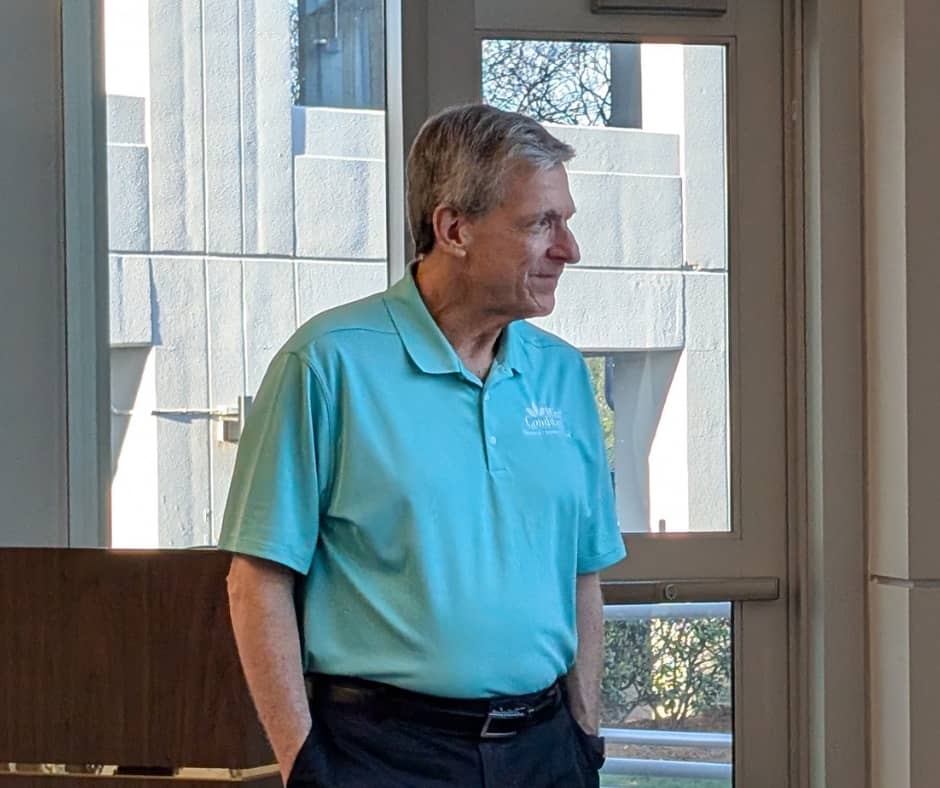
Small Business Owner to Multi Million-Dollar Franchise Founder: Jack Saumby's Inspiring Story
For some of us, 1996 might not feel that long ago.
For others, it might be a lifetime.
Thirty years ago, the world was quite different. Google didn’t exist. Amazon was in its first year (and only selling books online). The Macarena was playing on nearly every radio station (and people were still listening to the radio). And franchises such as Blockbuster, RadioShack and Payless Shoesource were going strong.
Meanwhile, Jack Saumby was laying the foundation for what would one day become the eight largest cleaning company in Charlotte, North Carolina. From Motel 6 cold calls to growing a national franchise brand, Jack’s story is the Mint Condition story.
Perseverance (1986-1990)
In 1986, Jack moved from Houston to Charlotte with no money, no contacts, and little support.
It’s not often that franchise owners can say, “The President and Founder of our company has literally done every aspect of this job,” but our Master and Unit Franchise owners can. Jack lived out of a Motel 6 cold calling 30-35 businesses every day while his wife and daughter stayed with family nearby. He was working during the day and cleaning retail businesses during nights and weekends.
By 1990, Jack had a steady book of business.
Then, he hit a major blow. Retail clients Lechmere, Ames and 7/11 filed for bankruptcy and Jack lost 40% of his business. At this point, he was close to shutting down, but instead of giving in or giving up - he pivoted. Jack began serving commercial accounts (rather than retail) and business began to pick back up.
Grit (1995-1996)
Within five years, Jack had seen Mint Condition on the precipice of shutting down to grow to $1 million in revenue and over one hundred employees. On paper, it looked like success - but in reality, it was a much different story.
Jack was feeling the financial pain of high overhead and physical pain of nightly “firefighting” which only added to the overall stress of running a business. He found, like many business owners, he couldn’t work on the business when he kept getting pulled to work in the business. Jack quickly realized the traditional model of growing his business was not sustainable.
Looking back, Jack calls this time “growth without efficiency,” and it was getting painful. He needed to streamline the business in a way that was both profitable and sustainable. So he adopted a franchise model that had a proven track record on which he began to restructure the company.
And, after nearly a decade of grit and perseverance, Mint Condition was formally born.
Innovative (1996-2006)
After structuring this franchise model, Jack grew busy traveling, building his FDD (Franchise Disclosure Document) and formalizing systems so that Mint was not just “another franchise model” but a best-in-class option for those who wanted to become a business owner. During this extremely busy time, some entrepreneurs might allow themselves to become buried under the exhaustion of pivoting the business (again) - but not Jack. He applied his hard-earned expertise to do more than just provide temporary solutions for daily operational chaos. Instead, he built lasting structural improvements to the system, including implementing a Revenue Replacement Program designed to improve franchisee retention.
Jack was not just building a company for profit - he was building it for people.
With the standard franchise model in place and humming along, ten years later, Jack, like most entrepreneurs, had energy to add another layer to the business: a Master Franchise model. This, again, required painstaking documentation and system roll-outs that could be repeated again and again. But the work paid off - in more ways than one.
Many of the early adopters of the Master Franchise model are still with Mint Condition today. Ted Aaron, Master Franchise owner in Raleigh-Durham, North Carolina, felt it was a “perfect fit” transitioning from a decades long career with IBM to Mint Condition. “Jack is very easy to get along with, and has great vision,” says Ted, “His vision helped give me confidence that I could do the same thing.”
Resilience (2010–2021)
While the industry of commercial cleaning proved to be “recession proof” during 2008-2009, the following years were still difficult with other outside forces taking aim at Mint’s reputation - and bottom line. Over the next few years, Jack faced broker challenges, failure to grow in new states, and finally - every business owner’s worst nightmare: litigation. While Jack triumphed over these hurdles (including in the courtroom), for Jack, the most important thing was that the integrity of Mint Condition’s reputation was also upheld no matter what others tried to do or say.
While no business wants to find themselves battling in court, the other side of that mountain was a prosperous next chapter. While the COVID-19 pandemic caused shut downs across the globe, Mint Condition added services or enhanced their already existing sanitary cleaning service. The company saw unexpected growth, and Jack set his sights on further growth - but this time with purpose.
Building a Legacy
Post-Pandemic has been an extremely rewarding time for Jack while the Mint Condition brand grows along with his leadership team. The company grew from nine to fifteen Master Franchisees (and seventeen territories) in just three years, and is poised for further national expansion. Not coincidentally, Jack has brought on the right people to support this growth as well as constantly reviewing and improving operational systems, software and programs that continue to elevate the Mint Condition brand.
In society, we often focus on the “happily ever after,” and forget - or maybe don’t even realize - there is a lot of grit and perseverance that comes with building a legacy. And while some entrepreneurs are made, in the case of Jack, we can confidently say he has always been built for this road. (Somehow, in all of his extra time, he holds swimming state records in freestyle and backstroke, and podium finishes across multiple years and age categories - no big deal).
Some people may have the genetic propensity to do a little more - or go a little further - than the average Jane or Joe. But if Jack’s story teaches us one thing, it’s that legacies are not built by avoiding the struggle, but by pushing through it with integrity - even when you don’t know how the end will turn out.
Meet the team behind the story and connect with us today.

6 Franchise Ownership Tips: Build The Future You Want
Browse any Slack channels, LinkedIn communities or Subreddits on Franchising and you’ll see questions like, “What type of franchise should I invest in?” “How much does a cleaning franchise make?” and “How is [insert today’s trending news story] affecting the franchise industry?”
It’s common to ask the external questions before jumping into a new career, but what about the internal questions? Questions like, “Do I have the traits to be successful in this industry?” “Is franchising right for me?” and “What is a priority in my life right now?”
This last question is a big one. It can shape all other decisions, especially when it comes to a career transition.
And while another position or promotion may offer more money, it doesn’t mean it’s the next best step for everyone. Across generations, we are seeing more and more executive leaders who need a break from the 60 to 80-hour grind that has become their norm.
Here, we share six tips on how to stop selling your time for income and create income while spending your time doing the things you love with the people you care about.
Tip 1: Redefine Success
In the past, success has meant more wealth, a bigger office, or the ability to buy the fanciest car on the block. But for many Gen Xers and Elder Millennials (ages 40-60) they know that more money, a bigger office and a fancy car come at a cost. Often, they are spending their time on airplanes or in hotel rooms - away from their families. They may also have a heavy burden of stress or obligation to reach certain performance milestones. And while they might have “unlimited PTO,” they are never too far from their phones or laptops. If this isn’t the world you imagined for yourself, ask yourself what is.
Tip 2: Stop Selling Your Time
This may seem like a trick, but we promise it’s not.
Most workers are getting paid for their time one way or another: either by an hourly rate or a salary in exchange for specific services or knowledge. Even a high-level leader in a large organization is selling their time - because there are only so many hours in the day to do their job.
However, other opportunities, like franchising, allows you to work yourself out of a job - without working yourself out of an income. Once you have a franchise up and running, others are typically providing the boots on the ground service that you oversee. Once a smooth operation is in place, you are able to step away from the day-to-day, only checking in when necessary. The business continues to generate income without you needing to touch it day in and day out.
Tip 3: Grow Your Community
Franchising isn’t just about personal gain — it supports employment in your community. As an owner, you are employing individuals who help keep your business running. As a Master Franchise owner, you are leading Unit Franchises throughout your territory (who go on to provide the services to your clients). Similar to your role as an executive leader in a corporate organization, once you have built your team, you are supporting them to do their very best work within the community where you all live.
Tip 4: Scale, Scale, Scale
One of the beautiful aspects of franchise ownership is the flexibility to grow as much as you want. For some, a single but predictable income stream is exactly what they need and desire. For others, they believe in growing the business not just in the number of units they manage (as is the case with our Master Franchises), but in the types of revenue streams that are available for their location and their skill set.
For example, if you were to own a Mint Condition Master Franchise territory that captures a sprawling suburban geographic area, you are likely looking at many medical and dental offices that would need regular and specific types of cleaning and disinfecting. This might differ from a more rural geographic area where manufacturing plants and warehouses require their own specific cleaning needs.
Tip 5: Build Success in an AI-Driven World
Many industries are facing automation and AI threats including information technology, sales and data analytics. While the reach of AI encompasses more and more jobs, a franchise in the cleaning industry continues to be untouched. A blue collar job, like cleaning or plumbing or carpentry, are relatively safe from AI (at the moment) and have even grown in popularity over the last few years. Computer Scientist Geoffrey Hinton said recently, “Jobs that include manual labor and expertise are the least vulnerable to modern technology than some other career paths, many of which have generally been considered more respected and more lucrative.”
Some franchise opportunities may not be able to weather the growth and changes of the current labor force and economic shifts of domestic and global policies. However, a cleaning franchise can. Local service-based franchises like Mint Condition provide human-powered work that is as essential to running a business as is having electricity.
Tip 6: Find the Right Fit
Franchising isn’t one-size-fits-all: there are multiple paths, industries, and models. We’ve discussed the important aspects of a system to consider before investing in a franchise model. Just because a system works for one person, doesn’t mean it will work for you. However, knowing who succeeds in a system (and whether this person is you) is also important. Ask yourself:
- Do my goals align with what a system will allow me to do?
- If I want more time with my family - will I eventually have that?
- Will I have the opportunity to create more financial independence without being tethered to a job?
The right franchise system will be able to shine a light on these possibilities.
The six tips (or questions) we’ve shared are certainly not an exhaustive list, but they provide an opportunity to pause and reflect before jumping into your next career move. The truth is, the corporate ladder isn’t the only way forward anymore. For Gen X and Elder Millennials especially, freedom, flexibility, and fulfillment matter just as much as financial gain (and sometimes even more).
Want to talk more about our Master Franchise Opportunities? Contact Randy Abernathy at randya@mintconditioninc.com.